| Mon
Book Info
Subscribe
| |||
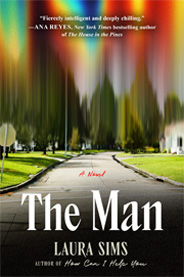
Dear Reader, I'm trying my best to write a column, but welts, actually big pink mosquito bites are bubbling up, especially around my ankles and it's really getting difficult to concentrate on anything except this itching. It's driving me crazy. I can't stand it and I shouldn't be itching, because I followed the rules. Life isn't fair. I preplanned and sprayed myself with a bottle of advanced insect repellent before I went outside to pot some flowers. So instead of being a lunch buffet--my legs, an arm, both ankles and even my big toe--the mosquitoes should've been pinching their noses in disgust. "Phew, that woman stinks." Yes, when that hungry swarm of skeeters buzzed near me they should have been repulsed, because the spray is supposed to trick them into thinking that this blood bank is tainted. Maybe I need to get a refund, because they seem to love the stuff. I swear I saw a swarm of six mosquitoes flying around with straws in their mouths. The buzzing swarm congregated, battle plans were formed, and I heard a loud, humming war chant and they attacked. I'm so tasty, they even came back for seconds--good to the last drop. Again, I stress life isn't fair, because I didn't buy the cheap stuff. I bought the top of the line, "Guaranteed to repel mosquitoes, chiggers, biting flies, no-see-ums, gnats and fleas." But apparently these mosquitoes, now filled with my fresh, red blood, don't read labels, or they don't believe everything they read. And apparently I don't either. My husband handed me a tube of Hydrocortisone cream. "Put a layer of this on and the itching will stop." So I followed his advice, layered it on my arms and was spreading it real thick on my legs, topping off my big toe, when my husband ran back into the room. "Wait! Stop! I gave you the wrong tube. That's the special toothpaste the dentist gave me last week." So--I'm still itching, but at least I smell minty-fresh and my legs are tartar-free. Thanks for reading with me. It's so good to read with friends. Suzanne Beecher P. S. This week we're giving away 10 copies of the book The Man: A Novel by Laura Sims. Click here to enter for your chance to win. | |||
I spot her through my Nikon lens at the annual Columbus Day Parade. Beyond the majorettes' ecstatic rouged faces and kicking legs, a teenage girl stands apart from the cheering crowd, darkly clothed and oddly still amidst the revelry. Her eyes were averted at first but now she looks straight at me, her mouth tremulous, mascaraed tears tracking down her face, offering up her misery like a gift. I take it. I take one shot after another until she turns quickly and disappears into the crowd. I have to stop myself from running after her. She reminds me of the young girl I once was, raw and hurting. I feel a stab of pain in my side and press hard against the spot while closing my eyes. I haven't felt this for a long, long time. A blare from the band's trumpet startles me back to the present. The pain has ebbed and the girl is gone, so I lift my camera and shoot a small boy with his eyes trained upward on the yellow balloon he holds in his hand. Next, I shoot a middle-aged woman lost in thought, her hands clapping but her face a blank mask. I keep moving, keep shooting, relishing each shutter click, all the while knowing that every picture will pale in comparison to the ones I've taken of the tortured girl. I can't quite believe she was real. As soon as I get home, I lock myself in the darkroom and work furiously until the negatives are hanging to dry and there's proof, in the room's red light, of the girl's existence. Later, staring at my contact sheet under the loupe, I see that her photographs are as good as I hoped they would be. Or feared: a new and terrible spasm goes through me. I sit down hard on my rickety stool, waiting for it to pass. When I'm able to stand, I stare at her some more. I'm not sure how much time has passed when there's a sharp knock at the darkroom door. "Judith?" Tom calls, sounding tentative. He rarely comes down to what he calls my "lair." I gather myself so I can greet him with an easy smile. "Getting hungry?" I ask. He nods, frowning slightly and scanning my face. "There's lasagna for dinner tonight." "Great," he says, and I follow him out, glancing back once more before shutting the door. 2. Professor Sorenson looks up from the handful of prints I've given him and studies me like he's seeing me for the first time: the quiet woman in his Introduction to Photography class. The one who's lingered timidly until everyone else finished their first "portfolio check" and left. Now we stand across from each other in the empty, semi-darkened lecture hall, and I'm pleased at his surprise; my pictures aren't what he expected: smiling children, flowers in bloom, or middle-aged women raising wine glasses in a birthday toast. "Judith, right?" he says. When I nod, he drops his eyes again to the photographs. He's moving through the pack slowly, drawing closer to Parade Girl. It may be the best picture I've ever taken, but I nearly left it out. I feared he'd look into her face, into those tearing eyes, and see the younger me—like I did. 'Ridiculous', I tell myself. 'Impossible.' But I hold my breath, waiting for his reaction. When he reaches Parade Girl, I watch his eyes move slowly over every inch of her face and the people around her with flags waving, mouths shouting. He shakes his head but doesn't look up. "This is terrific," he says, quiet enough to be talking to himself. "Just terrific." I let out my breath, relieved, though my cheeks warm with his words of praise. I can suddenly hear the loud ticking of the classroom clock. "Every single one of these is stunning, Judith. You have an uncanny eye." I'm too flustered to respond at first, so I reach for my pictures. But when he hands them to me— reluctantly, it seems—I simply want to hand them back. To keep living in the moment of watching him love my photographs. "Thank you, Professor," I say at last. "Call me Paul," he says. "Everyone else does." He smiles. "And you've got nothing to thank me for—the pleasure is all mine. Have you thought about submitting these to magazines? There's—" "No," I say abruptly. He's taken aback. But the thought of making my pictures public makes my skin crawl. As if he's asked me to stand naked in the town square—though that wasn't his intention, I know. "Thank you," I add, putting more emphasis on the words this time. Professor—Paul—nods and holds up his hands. "I get it," he says, though I know he doesn't; he can't. "It's a private passion. But you should think about it." I lie and say I will, then thank him again and turn to go. But before I can get to the top of the steps, he calls my name: 'Judith'. I like hearing him say it, knowing that now he knows exactly who I am. "Bring me your work anytime. I'd love to see more." I hadn't thought beyond tonight, past satisfying a class requirement. I'd never dreamed Paul would react this way—or that I'd 'want' to show him more. But the force behind his words and his pleading smile act on me like a stiff old-fashioned—my grandmother's drink—coursing through my veins. What could it hurt, to show him more? 3. "What does that even mean?" Tom asks, forking up a bite of steak. He's puzzled by Paul's comment about my "uncanny eye." I don't know why I mentioned it; he doesn't like hearing about photography class. 'Why go to school for something you're already good at?' he asked when I first brought up going to the local community college. Really, he didn't like the change it would mean—the change in our Tuesday nights, or the possible change in me. And now I've blurted out what Paul said last night, and Tom is resentful. Confused, and possibly suspicious, too—of my male professor taking an interest. He chews and looks at me. "It means I see things...differently, I guess." The back of my neck burns. I wish I'd kept it to myself. I'd meant to keep it to myself, but it came spilling out. 'Pride will out', I suppose—like Grandmother used to say. "Or maybe the professor didn't know what to say, but he knew he had to say something," I offer with a half-hearted laugh, careful to say 'the professor', not 'Paul'. It gives me too much of a thrill to say 'Paul', and Tom would see it in my face. We go on cutting, chewing, and swallowing the steak, asparagus, and potatoes au gratin: our habitual Wednesday night meal, one that hasn't changed since before Tom Junior left home. Nothing more is said about Paul, or photography class, or my "uncanny eye." I'm relieved he's let it go, but wistful, too. Tom tells me about his day, about the ongoing politics of the Harrington Public Works Department. Normally I get caught up in these reports: 'Travis left the meeting abruptly? Sven and Jonathan said that only to you? Are you sure?' Tonight, though, I drift away, savoring Paul's words and the look on his face when he saw my pictures: open-eyed, surprised, more alert than I'd ever seen him, even in the midst of one of his energized lectures. If he'd been a dog, his ears would have perked up. Like our little Rosie. Dead for three weeks now. Buried in the backyard, under the magnificent cherry tree. Tom wouldn't let me help. He was sad, too, I knew, and wanted time to himself with Rosie in her box and the growing pile of dirt by his worn leather work shoes. I watched from the back window, wiping my tears with a dish towel. Sweet Rosie, my Rosie. Tom Junior had called in disbelief, as if he'd thought she would go on whining for scraps by the dining room table forever, Tom ceaselessly shooing her away while we all laughed. I'd believed it, too. I blink back tears and take a bite of potatoes. It sticks in my throat. I have to gulp water to keep from choking. Tom stares at me bug-eyed. (continued on Tuesday) Love this book? Share your review with the Publisher
| |||
| Mon Book Info | |||