| Mon
Tue
Wed
Thu
Fri
Book Info
Subscribe
| |||
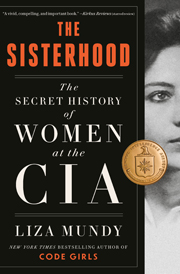
Dear Reader, Mack is coming to Thanksgiving dinner this year! He used to live just down the street with his parents. He’s all grown up now, but he stops by frequently to say "Hello." (And he loves my chocolate chip cookies.) I first met Mack years ago when… My neighbor stopped to chat when I was out for a walk. His son, Mack, was supposed to be writing an essay to submit along with his college application, but 'Dad' (my neighbor) was getting concerned, because he hadn't seen anything written yet. So he suggested, maybe Mack should come over to my house Saturday evening to talk about his essay. I was happy to help, but later that evening I got to thinking that a senior in high school probably wasn't going to be too excited about talking to the neighbor lady about writing--especially on a Saturday night. The topic Mack had chosen was how reading Mack's topic was going to be how reading Science Fiction had influenced his life. So I decided to see if I could influence Mack to telephone me. Early the next morning, I walked over to his house and left a stack of Science Fiction books outside the door, with a note tucked inside: "Mack, I heard about the essay you're working on. Great topic, I'm curious. The books are yours to keep. Hope you enjoy them, Suzanne." It was kind of exciting, doing a little "undercover" work, waiting to see if Mack would take the bait, and I was just about ready to give up hope when finally at 1:30 in the afternoon my phone rang. The books did their job. Mack thanked me over and over again, so I Mack was pretty quiet at first and I could tell he still wasn't quite sure what topic he wanted to write about. So I asked him how he liked to spend his time, and after we talked about computers, Science Fiction and his friends, he mentioned his dog. He has a chocolate lab, but he still misses his first dog, who was 15 years old when she had to be put to sleep. And when I asked Mack who took the dog to the vet when she had to be put down, Mack looked down at the table and his voice got very soft, "My mom took my dog to the vet while I was at school." I knew he was holding back the tears and by this time, so was I, but I told Mack that crying can be very inspiring. Sometimes when I'm writing a column, I'm crying while I'm writing and I feel exhausted when I'm finished. I'd brought along a column about putting your heart into your writing and I showed Mack a page of random notes I'd written before I got the idea for the column. I wanted him to see what the beginning of a column looks like before it's written--what a mess it is--hoping it would make him feel a little less pressured. And in the scattered notes, I pointed out the one line that ended up giving me the idea for my "Putting Your Heart Into It" column. Before we said good-bye, I told Mack no doubt about it, I was sure there was a great essay inside of him, and I had the feeling it was about his first dog. Dad called the next morning, while his son was still sleeping, "You certainly gave Mack a lot to think about, he was up most of the night." Apparently Mack was up thinking about his dog, because yesterday I read Mack's story: "My first dog was my best friend for much of my childhood. He was a sweet yellow Labrador with hardly any yellow..." It was a wonderful story about a boy and his dog and a lesson learned about life. "Sometimes the most painful thing we do, helps the ones we love." It was a story that left me in tears. Thanks for reading with me. It's so good to read with friends. Suzanne Beecher P. S. This week we're giving away 10 copies of the book The Sisterhood by Liza Mundy. Click here to enter for your chance to win.
| |||
Dulles called her at 9:20 every morning; they had a private code that consisted of slang and outlandish made-up names. She also met with his contacts. She called it "stroking the people I saw for Allen." In espionage, this is called handling. By 1943, Bancroft was working full time for Dulles. She often found herself in settings with people from all over Europe and the world. She listened to gossip. Dulles, like everybody in the OSS, was new to the spy business, and Bancroft seems to have intuited some key principles before he did. When he complained Hitler was getting many facts wrong in his speeches, Bancroft, who had read 'Mein Kampf' in the original German, explained the "Nazi theory of propaganda," pointing out that it had "nothing to do with presenting facts accurately" but was "an appeal to the emotions of the German people": a Big Lie. She also explained aspects of human sexuality to her boss, who for a man of the world seemed startlingly naïve. Once, they started discussing the Nazi criminal code, which criminalized homosexuality. "What do these people actually do?" Dulles asked her. " Don't you know? I asked in astonishment. Allen shook his head. Do you want me to tell you? I asked. If you know, said Allen, looking skeptical. So I took my courage in my hands." When she finished explaining to him sex between men, assuring him same-sex couples "do different things just like everybody else," he was "red in the face" and told her she should be ashamed, but said, "I'm glad to know." Another time, she told him the Hungarians thought Dulles was gay and having an affair with his male secretary. She also reported that Gisevius had told her "The real bond between Himmler and Heydrich was that they had once been 'involved' with one another." These facts of life came as news to Dulles. "He is a gentleman," his butler told Bancroft. "He understands nothing!" Her housekeeper, Maria, a native German, showed Bancroft letters from her brother-in-law, who reported that "there are no more aluminum spoons in Germany." Dulles called the housekeeper "the Wehrmacht" and always wanted to know what she thought. Bancroft's husband slipped her tidbits and put her in touch with Yugoslavs. He didn't mind that his wife was having sex with the spy chief; in fact, he was flattered. As Dulles expected, Bancroft by now had acquiesced. On her weekly visits to Bern, they'd have drinks and dinner, discuss news, and "engage in a bit of dalliance" before she made her way through darkness to her hotel. Like many a male leader before and after, Dulles understood that having a tip-top right-hand woman working on his behalf—brilliant, unconcerned with her own advancement, sexually available when he needed an outlet—was, for him, win-win-win. What little has been written about Bancroft portrays her as a redlipsticked honeypot. In truth, Dulles was the aggressor. In her memoir, she describes a morning when he rushed into her Zurich apartment knowing her husband was away and her daughter at school. "By chance, the maid was out at the market. His hat pushed back on his head, his pockets stuffed with newspapers, he said, quick! Without any further preliminaries, he added, I've got a very tricky meeting coming up. I want to clear my head. Feeling it was too risky to go into my bedroom, we settled in on the living-room couch. In scarcely more time than it takes to tell the story, he was on his way again, pausing in the doorway only long enough to say, Thanks! That's just what I needed!" The maid returned within moments, and Bancroft, rattled, vowed not to cooperate with that kind of impromptu head-clearing again. Bancroft knew her ability to listen served a vital purpose for a pressured man on whom the fate of the free world rested. In a detail that is almost too good to be true—but is true—she happened to be in analysis with Carl Jung. The psychoanalyst knew of her spy work and said it was her role, as a woman, to give powerful men someone to talk things over with. "Men like Allen, very ambitious and holding positions of power, needed to listen to what women were saying and not go off the deep end" was her summary of what Jung told her. For their part, Jung and Dulles were almost comically fascinated by each other. Bancroft helped Jung write a letter to Dulles, and then helped Dulles write his response. She referred to it as "all this corresponding with myself." Dulles confided in Mary Bancroft in a way he did not to his own wife, Clover, with whom he settled into a long-distance marriage of convenience. Dulles called Clover an angel and did not tell her anything about what he did. He seems to have regarded a wife as chiefly a vehicle to a man's advancement; Bancroft noticed that once, when a mutual acquaintance became engaged, Dulles wondered why a man would marry a woman who didn't seem "useful." Being shut out pained Clover, whom Bancroft described as vague and otherworldly. Clover was worldly enough to enjoy being the wife of a prominent husband, however. She confided to Bancroft that they had terrible fights. And when Clover Dulles came to Switzerland on a visit, she sized up their relationship right away. "I wanted you to know I can see how much you and Allen care for each other," she told Bancroft, "and I approve!" The two women conspired to look after Dulles. Bancroft saw herself as "far less idealistic" than Clover. "I knew his dark side . . . and it didn't bother me in the least." Bancroft played a similar, if nonsexual, role with her German asset, spending long hours with Gisevius under the pretext of translating his memoir. He did not realize she was reporting their encounters back to Dulles. She played into his self-importance; he was puffed up enough that it seemed reasonable a woman would want to immerse herself in his life story. His role as a double agent—employed by the Abwehr but secretly conspiring to assassinate Hitler—was so dangerous, he didn't feel it would be ethical to have a wife or girlfriend. He told her "it would mean a great deal to him to be able to discuss his ideas with a woman." So voluble were his confidences that Bancroft took a helper: Elizabeth Scott-Montagu, a British friend who had driven ambulances in France until she had to flee the Gestapo. The two women drew him out. They would "focus our entire attentions on the author, and off he'd go. Into his fascinating stories that were so useful in giving helpful insights into the personalities and intrigues of the Nazis." The intelligence, gathered in no small part thanks to Bancroft's efforts, helped cement the reputation of Allen Dulles. He would go on to become the foundational director of the CIA. As officers in Europe and Asia developed their tradecraft, other American women pioneered the analytic methods that proved one of the war's real and lasting intelligence achievements. Among these was Cora Du Bois, who in 1942 joined the Research & Analysis branch. A renowned anthropologist and open lesbian who had spent time in Indonesia and Ceylon—at the time, enough to make her a relative expert in the South Pacific—Du Bois first worked in Washington, extracting all the "dope on which we can lay our hands" about population, geography, and fortifications along key Pacific area coasts. Confronted with thin file-keeping at the Navy's hapless Office of Naval Intelligence, she sought out missionaries, travelers, Dutch and British colleagues, and anyone else who knew the shoreline, producing reports that helped enormously as Americans mounted dangerous amphibious landings in an effort, successful, to retake landmasses in the Pacific and Asia. In 1944, Du Bois found herself traveling from San Francisco to Bombay on the SS Mariposa with hundreds of male GIs and a handful of civilian women. Nine of the women were OSS personnel, among them Julia McWilliams, a gregarious Smith College graduate hired as one of Donovan's clerks. Tall Julia—as Du Bois fondly called her shipmate—was a jolly colleague, a party lover who "retained her sense of humor" and proved a "lovely mad woman, you know, when she gets sportive." In Kandy, Julia McWilliams would meet her husband, Paul Child, a State Department mapmaker. After the war, she accompanied him to Marseille, where Julia Child found her calling as the chef who brought French cuisine to the American kitchen. For her part, Cora Du Bois fell in love with Paul Child's assistant, Jeanne Taylor. The foursome would remain friends; the Childs settled in Cambridge, Massachusetts, where Du Bois in 1954 became the first tenured female professor in the Faculty of Arts and Sciences at Harvard. During the war, Du Bois rose to become chief of SEAC, the Southeast Asia research and analysis branch, the only woman to head a branch of the OSS. Working with local sources, she created an "unexcelled map service" for planning Allied invasions and landings. Known for crisp, acerbic cables, she enjoyed the work "more than any I have ever set the hand to." Her successor wrote, "I have no illusions about being able to do the job as magnificently as Cora did." At war's end, Du Bois received the Exceptional Civilian Award, and joined the State Department, which inherited the OSS research branch. There, analysts in her office perceived the importance of unexploited colonial regions and foresaw the peril of US involvement in Vietnam. Du Bois also personifies the postwar brain drain. After the Japanese surrender, exclusion—not inclusion—became the order of the day. During the power struggle between the FBI's J. Edgar Hoover and the architects of the CIA and State Department, Du Bois and Jeanne Taylor were witch-hunted out of public service. In 1947, Taylor was compelled to resign because, as a young artist, she had voted for a Communist. In 1948, the FBI launched a "full field investigation" of Du Bois, at a time when more than four hundred homosexuals in the State Department were "fired or harried into resignation." The FBI file for Du Bois, who never hid her relationship with Taylor, noted she was "single" and living with a woman. After the war, women faced much pressure to resume their roles as mothers, helpmeets, and housewives. Wartime ads had exhorted women to serve the war effort—"The more WOMEN at work the sooner we will win!" read one of many posters—and after the war, the same propaganda urged them to depart the workplace "as you promised," in the words of one newsreel, to free up jobs for returning men. America's spy apparatus concurred, to a point. The OSS was dissolved (technically, absorbed into the State Department) with the thinking that peacetime required less in the way of intelligence effort. But soon enough, the Cold War called for more—much more. In 1947, after an interim year as the "Central Intelligence Group," the Central Intelligence Agency was created by an act of Congress. A few inept early directors emerged from the US military and disappeared quickly-Rear Adm. Sidney W. Souers lasted from January to June 1946, Lt. Gen. Hoyt S. Vandenberg a bit longer, replaced by Admiral Walter Bedell "Beedle" Smith, who somewhat righted a wobbly ship. The agency grew fast. By the 1950s, under the ambitious and well- connected Allen Dulles, the workforce reached an estimated ten thousand people, half its modern size of approximately twenty thousand. For a decade, it continued to hum along in a hodgepodge of buildings and old barracks in Foggy Bottom and the National Mall, with buses, the "green beetles," shuttling between them. These included I, J, K, and L buildings-wartime temporary buildings clustered near the Reflecting Pool and containing vast stores of physical records, invisible behind barred windows through which the women who kept them peered out. Before trips abroad, officers paid visits to Central Processing, where fake passports and travel papers were dispensed by "old broads," as one hardboiled case officer dismissively called them. "There seemed to be no way to jar the spinsters into any sort of priority action," this case officer complained, saying that any time he went to the Records Integration Office, he had to "wait hours for girls" to run biographical traces on prospective assets. Upon its creation, the CIA was instantly one of the most important spy services in the world. Directors complained about how tough it was to find good men—ignoring the obvious truth that, for the corps of officers, the agency confined the search to men who were white, (mostly) wealthy, and straight. In Hoover's Washington, gay men and lesbians were shut out of federal service. The scrutiny was merciless in intelligence work, reflecting the belief that men who had sex with men were vulnerable to blackmail. People of color often were steered into administrative jobs. Recruiters avoided "inner cities," and security officers torpedoed applicants with "nonstandard" backgrounds. But the women did remain, or many of them—ubiquitous, and in some cases powerful. Like Wall Street, Detroit, and Madison Avenue, the agency needed women to type letters, keep files, take dictation, build archives, edit reports, and communicate between headquarters and the field. Women ran the finance and personnel offices, developed budgets. Recruiters for clerks and typist positions sought young white women from places like Pennsylvania and West Virginia; it was thought that single women from nearby states would be willing to leave their families to live in places like the Meridian Hill Hotel for Women. Once they were married, it was assumed they would resign. The women briskly amassed quite a bit of knowledge, and not just about spycraft. They learned a lot about the men—not only typing their correspondence, but often composing it—and put that knowledge to use. Like le Carré's Russian-hunting Connie, the women were careful. Suspicious. Perceptive. Cranky. Women worked in the public affairs office, fielding calls from the public, listening sympathetically to job seekers as well as cranks and paranoiacs who thought the CIA was eavesdropping on them through tooth fillings. Regardless of their real name, the women of public affairs signed all correspondence "Grace Sullivan." Any number of men built careers on the work of women in the back office. And the jobs to which women were relegated were often more important than acknowledged. It may or may not be true that women are more patient than men. What is true is that women were believed to be more patient, and thus were steered into jobs requiring attention to detail. "Patience, thoroughness, skepticism, and tireless review of data are the marks of a good counterintelligence officer," observed Ray Cline. Counterintelligence entails identifying attempts by foreign spy services to penetrate the agency. It "depends on records: understanding who is in touch with whom," Cline noted. Women built a huge brain, records of who knew whom and who had been spotted where. In those early days of the CIA, women's spying was rarely acknowledged, often unofficial. As the years went on, however, and the agency became one of America's leading instruments of foreign policy, women fought their way into the spy corps. They made major contributions in an era when the fight against Communism was paramount, and the survival of the United States was existential. Women believed in the mission. They brought unique gifts and they made unique sacrifices. Women spies during the Cold War almost never married. Even fewer had children. Not because they didn't want to. Women who aspired to serve abroad were told to forgo having a family, whereas for men, having a wife and children was encouraged. Wives participated in the mission, helping husbands elude surveillance and cultivate the cover story of a normal American diplomat leading a normal American life. It was exquisitely tough for aspiring female spies to rise within these structures, at a time when what we today call institutional sexism was everywhere practiced. At CIA's training academy—the Farm—women in the 1950s, 1960s, and 1970s were denied training and certification for jobs that involved actual intelligence collection. "Men were the case officers, and women were the reports officers," one CIA officer told me, describing a rigid division of labor whereby men ran spy rings, recruited assets, and handled them, while women sat at desks, editing and often rewriting the reports they filed, and reining the men in—or trying to. Even when doing the same work as men, women were expected to do it more cheaply. A friend of mine, a former case officer, described the agency's tactic of hiring women from elite colleges and making them secretaries, which lasted well into the 1980s. "You have to understand," he said, "the women didn't matter." The women also had to contend with an atmosphere of reckless sexual infidelity, for which Donovan and Dulles set the standard. Women staffers were sent from desk to desk to get people to sign off on cables; on days when they were perceived as especially fetching, they'd be dispatched around for colleagues to gaze upon. One of the early architects of the CIA's clandestine service, Tracy Barnes, told his secretary that men join the CIA because "they crave constant danger and for the sex." According to William Colby, the "romantic activism" of Barnes's colleague Desmond FitzGerald "produced great dinner talk." In postwar Washington, it took a lot of sexual activity on a man's part for it to be considered noteworthy. FitzGerald was behind the agency's many, often bizarre, efforts to assassinate Fidel Castro and embodied what Colby called "the macho atmosphere of secret operations." Colby himself—despite his own reputation as "the choirboy"—was always assessing how women looked. In his memoir, the US diplomat Clare Booth Luce was "extremely attractive," Vietnam was full of "wonderfully pretty women." The women, no matter how bright or experienced or capable or ambitious, usually started out typing and filing. At first, the records of the CIA were kept on 3 x 5 cards, and it was women who typed these or handwrote them. Name traces—a search of records to see who does what and who knows whom—are essential to spy recruitment; women kept those records and knew their depths and secrets. They built the classified database that became the foundation of the agency's modern high-tech tracking technologies. "Whether the counter-espionage file was a simple card file, as it was initially, or a vast computerized research bank, as it became in CIA, it was impossible to conduct any foreign intelligence collection or to analyze hostile intentions toward the United States without building such a set of records," noted Ray Cline. And, because they understood the importance of relationships, the women— eventually—began to develop relationships with each other. This took a while and was often discouraged. But over time, they sought solidarity and, sometimes, solace, and learned to join forces. They warred, thrived, and fought an institution that was more than willing to fight back. They would form a sisterhood—and they would win their place. Love this book? Buy a copy online.
| |||
| Mon Tue Wed Thu Fri Book Info | |||