| Mon
Book Info
Subscribe
| |||
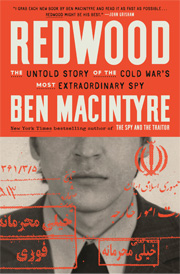
Dear Reader, Find the voice inside of you and enter the 22nd Annual Write a DearReader Contest. To get all the info, deadlines, cash prizes, how your library can get involved, and read last year's winning entries, click here. Buzz, whine, buzzz.......zzzzz.......zz. When I looked out the window someone was hacking the limbs off the tree in my yard. There was a crew of workers out in front of my house, orange cones lined the street, a flagman, and a guy in a white bucket high up in the air with a deadly chainsaw. What the heck was going on? This scene looked familiar. They came around a few years ago--the tree cutters from the power company. I had to fend them off then because they wanted to chop down my palm trees and it looks like I'm going to have to do it again today. I'm not a tree nut, I realize that trees, people, and power lines all have to find a way to coexist. But why do they need to cut down big, beautiful palm trees when all they really need is a good trim? That was my argument a few years ago and that's what I was trying to ask the man today. But the noise from his truck and the machine that was grinding up the tree limbs was deafening. The man couldn't hear me. I couldn't hear him and the guy with the deadly chain saw just kept cutting my trees. So I did the only thing I could think of doing. I jumped in the tree cutter's truck, turned the motor off, took the keys out of the ignition and put them in my pocket. Ah, silence. "Now can we talk?" I asked him. He decided to quit for the day, but I knew he'd be back tomorrow morning to cut down my trees and I had no idea how to stop him. I dialed the mayor's number, but his secretary said he was at a ground-breaking dinner. The city's regulation maze--I wasn't familiar with it and researching where to complain and how to fight the system, it was overwhelming. Besides, where would I find the time to put up a fight? It's not like I had any free time in my day. I was accepting defeat but I hadn't even put up a fight. Where was the old Suzanne? She used to fight the good fight when she needed to. Am I so consumed with my work that I don't have time to stand up for the things I believe in? When I called a friend and told her my tree story she said not to worry. You don't have to take on every fight yourself. Everyone has their job in this world and she knew a woman who'd taken on the job of saving the trees. And 30 minutes later the Save the Trees woman telephoned and told me to expect a call from an arborist who worked for the city. The arborist did call, in fact he stopped by my house early the next morning and he agreed that my trees just needed a good trimming. I guess I did have the time to fight the good fight--I just needed a little help from a friend. Thanks for reading with me. It's so good to read with friends. Suzanne Beecher P. S. This week we're giving away 10 copies of the book Redwood by Ben Macintyre. Click here to enter for your chance to win. | |||
On a hot autumn evening in Tehran, two professional spies, one Russian and the other British, sat drinking in a small, white-tiled bathroom on the top floor of a house in the semi-abandoned compound of the British Embassy. The Russian, a major in the KGB, was over six foot four inches tall and as broad as a bullock. The wicker laundry basket beneath him buckled and creaked dangerously. The Englishman, perched on the toilet, refilled his guest's glass with vodka, and wondered if he was dreaming. To cover the sound of their voices, the cold taps were running into the basin and bath and a radio played. The MI6 officer suspected his home was bugged from attic to basement by the Iranian secret police. If the Islamic Revolutionary Guards overheard this conversation, they would both be arrested, interrogated, imprisoned, and possibly executed, once the torture was completed. The year was 1981, two years after Iran's tumultuous revolution. Ayatollah Ruhollah Khomeini presided over an increasingly hard-line Islamic regime. Tehran was a boiling crucible of espionage, bloodletting, and score-settling, as Islamic fundamentalists, nationalists, and Marxist groups fought for power. Competing Iranian intelligence services spied on everyone, all the time, as well as on one another. Thousands of the ousted shah's supporters were in hiding, or in exile, or dead. Suspected counterrevolutionaries, foreign spies, leftists, fifth columnists, and unbelievers were being rooted out and eliminated by fanatical Islamist enforcers. But the Revolution was still young, unstable, and vicious, and the Ayatollah's grip on power had not yet tightened into theocratic despotism. Civil war raged, while Iran simultaneously fought a ferocious war against Iraq. For the rival spies of East and West, the KGB, CIA, and MI6, there were rich pickings to be found amid the chaos and the carnage, which is what made the Russian's story so valuable, and so very dangerous. The KGB officer knew of a Soviet plot that could tip the balance of the Cold War. What he described had the potential to trigger nuclear conflict: plans for an armed coup by Soviet-backed Iranian communists, a bold plot to seize power from the clerics, establish a new government on Marxist-Leninist principles, and invite in the Red Army. Russian tanks would roll across the borders from Soviet Azerbaijan, Turkmenistan, and Afghanistan (invaded by Red Army troops eighteen months earlier). A Soviet occupation of Iran was the West's worst nightmare. With its power extending all the way to the Persian Gulf, Moscow would control the warm-water ports and the oil fields. The USSR could win the Cold War. If America resorted to nuclear weapons, the world might be transformed, and possibly destroyed. An underground force of committed Iranian communists was secretly stockpiling weapons, a KGB sabotage plan was in place, and money was pouring in to finance the plotters. The coup might happen tomorrow, next month, or never. The Russian officer knew all this because it was his task to liaise with the Iranian communists. He was the linchpin of the conspiracy. And now he was offering to swap sides and share this terrifying secret with the West. But he needed something in return. Water sloshed down the drains, and the KGB spy emptied his glass. The Englishman refilled it. "I have big problem," said the Russian, his heavily accented English slurring, the color rising in his wide, handsome face. Then the huge spy leaned forward and placed a hand on the Englishman's knee. "Will you help me?" The MI6 officer nodded, wondering what could possibly be coming next. The Russian's problem was one that many men experience at some point in life, but few acknowledge. Some never admit it to themselves. It is a burden that can drive a man mad, wreck relationships, and de stroy love. One of the last taboos, it is an emasculating medical and psychological affliction shrouded in mystery, shame, and the most intimate embarrassment. The Russian was whispering now. "In the West, there must be pills, yes? Western medicine is in all ways superior to Russian. A cure." His voice was pleading. The Englishman nodded again, patting the massive hand that gripped his leg. "We can help you," he said, wondering if that was true. In the time it took to run a bath, the KGB spy became a double agent, his betrayal purchased with an extraordinary promise to solve an ordinary but then insoluble human problem. The British spy had never encountered anyone quite so tall. When the Russian got to his feet, he towered over him, swaying slightly, like a mighty tree in a gentle breeze. MI6 gave him the code name REDWOOD. 1 ELITE FORCES At the age of twenty-two, Vladimir Andreevich Kuzichkin discovered he was not who he thought he was. Kuzichkin's childhood was privileged, by Moscow standards. His father, Andrei, was a KGB officer, undistinguished and disgruntled, but enjoying the benefits that came from membership in the Soviet Union's all-powerful intelligence and security service. His mother, Elisabeta, was an office typist. Born in 1947, Vladimir was principally raised by his maternal grandmother, who spoiled him. Despite the privations of postwar Russia, the family had enough to eat, clothing coupons, and holidays in a state dacha. When Vladimir was seven, they moved into a three-room apartment in a cooperative block in the Leningrad District, surrounded by a high fence to keep out the poor from the slums. An only child, little Volodya considered this a life of "luxury." But the family had a streak of violent unhappiness running through it, fueled by vodka. Andrei Kuzichkin was a vicious alcoholic. He beat Elisabeta on the weekend and whenever he drank during the week, which was usually. She suffered repeated miscarriages. This added to Andrei's fury. He hit his son, too, until the boy grew big enough to defend himself. By the age of fourteen, Vladimir was already over six feet tall. Intelligent and sensitive, Vladimir had hated his father for as long as he could remember. One summer in the dacha, he befriended a domesticated pig named Vasili, feeding the animal leftovers and teaching it to come when he whistled. At the end of the holiday Andrei sternly summoned Vladimir to the barn and insisted the boy watch as he killed his pet with a hatchet. Ten-year-old Volodya wept for a week, but not in front of his father. Like many abused children, fear and hatred brought complex secret feelings of guilt and self-loathing. "What kind of a person am I that I detest the man I came from?" he wondered. Sometimes he imagined killing his father, with an axe. The boy rebelled, insofar as that was possible in Soviet Russia of the 1960s. He ran with a gang of street toughs and got into fights. His height made him a target. To defy his father, he refused to join Komsomol, the communist youth league. He listened to bootleg pop music from Britain and America and aped the forbidden fashions of the capitalist West. He also discovered the songs of Vladimir Vysotsky, an unruly star of the new Moscow folk underground. With a cousin and two friends, he formed a rock band called The Brothers. At the age of eighteen, wearing flares and two-inch home-adapted Cuban heels, Vladimir Kuzichkin imagined himself as a gigantic Russian version of Cliff Richard or Paul McCartney. "We are going to be the Russian Beatles," he declared. Andrei Kuzichkin said his son's music was rubbish and that The Brothers would never amount to anything. He was right. Vladimir Kuzichkin finished school with good grades, a reputation for fistfights, a taste for Western pop, a damaged soul, and no ambition. Called up for three years' military service, he was sent to Hagenow in East Germany as a radio operator in a nuclear missile launching unit, the front line of the Cold War. "In the event of war," he recalled, "the division's task was to annihilate Hamburg with six tactical nuclear missiles" and then be obliterated in turn, in accordance with the logic of mutually assured destruction (MAD). The naïve young conscript was not overly concerned by his assigned role in nuclear Armageddon. He was very bored. One morning, Kuzichkin was summoned to the commander's office to take an urgent telephone call from his mother. "Your father is dead," Elisabeta Kuzichkina said, her voice hoarse. "You must come home." Granted two days' compassionate leave, on the train to Moscow he wondered at his own lack of grief. He was unable to cry. His overwhelming feeling was not grief, but relief. "Now I don't have to hate myself so much," he reflected. Opening the apartment front door, he found Andrei Kuzichkin seated at the table, very much alive, and drunk. The older man picked up his bottle without a word and retreated to the bedroom. Between sobs, Elisabeta confessed her lie. Vladimir's father was not Andrei Kuzichkin, but Georgi Alexandreevich Larkin, a tall, good-looking construction engineer of Irish ancestry, hence his unusual surname. Elisabeta and Georgi met after the war, and she had become pregnant. They intended to marry. But then he was sent to Siberia to build a steel factory. Georgi urged her to come too. She refused. What would she do there? Moscow was the only world she knew. Larkin never returned from the east. For a few years Elisabeta struggled on as an unmarried working mother, while her mother cared for the child. Her sister was married to a KGB officer, who introduced her to his brother, also in the KGB Andrei Kuzichkin was boozy and rough, but he had a good job. Andrei offered a future. He even reluctantly agreed to adopt her child. And now Georgi Larkin, the only man she had ever loved, was dead from a heart attack on a bear-hunting expedition in the Siberian wilderness. It was four hours before they discovered his body in the snow. Vladimir Kuzichkin was baffled and furious. "How could she deceive me all these years?" he wondered. He ignored Andrei from that day on. And yet the discovery explained everything: the dislocation he had always felt; his hatred for the man who had pretended to be his father and beaten that untruth into him. More prosaically, it explained his height and coloring. To his friends, bandmates, and army comrades, he was still Kuzichkin, the lanky would-be pop star, but inside, secretly, he was Larkin. The discovery of a real father, now invested with imaginary qualities Georgi had never possessed in life, awoke the possibility of making himself into someone else. So that is what he did. To begin that transformation, he decided, he would need some higher education. Back at the Hagenow base, he plunged into the officers' library and began reading ravenously. He joined the Communist Party (an unshakable requirement for anyone with ambition in Soviet Russia), but without much conviction. He had recited the mantras of Marxism from his earliest childhood, and believed them, along with everyone else. The discovery of his real father made him question everything he had grown up with, including communism. He did not share these heretical thoughts with anyone else. He barely admitted them to himself. After three years in uniform, Kuzichkin applied to study at the Institute of Asian and African Countries in Moscow, a specialist university teaching Oriental and African languages. Mastery of a foreign tongue "raised the probability of future work abroad." Reading down the list of language options, from Arabic to Zulu, he settled on Persian (or Farsi), the language of Iran. It sounded intriguing, and the course was undersubscribed. A model Soviet citizen with good academic grades and a clean military record, Kuzichkin was told to report to the Institute on September 1, 1970. In addition to Iran's language, culture, and history, the six-year course included a substantial ideological component: Communist Party history, dialectical materialism, Marxism-Leninism, philosophy, and political economy. Each student was required to learn an additional Western language: he chose English. If he was deemed suitable, the fourth year (1973–1974) would be spent in Iran. Located on Karl Marx Prospekt opposite the Kremlin, the Institute was controlled by the International Department of the Central Committee of the Communist Party of the Soviet Union (CPSU). Like every other organ of state, its primary function was to bolster communism and spread the doctrine of revolution worldwide. Kuzichkin was now "in the fast lane of Soviet society," he reflected, a student at a top university with a bright future: "There was nothing to bar my progress." Kuzichkin was a shy, awkward young man, as tall people sometimes are. Except when drunk. Alcohol brought out the extrovert in him. In social situations he tended to drink fast and deeply, before seizing a guitar and bursting into song. Women were drawn to this gentle, melodious giant with bright blue eyes and a shock of fair hair. In October, at a party thrown by a friend of his flatmate, Kuzichkin plucked up and soaked up enough Dutch courage to ask a girl to dance. Her name was Galina Lvovna Kokosova, a petite, pale, sweet- faced woman two years his junior. They swayed to bootlegged Rolling Stones records, her head on his chest, tiny in his arms. Galina, known as Galya to friends and family, could not understand how such a handsome man could be attracted to her. "I was a very sad and lonely 22-year-old girl: I wasn't in love with anyone; I didn't have any particularly close friends; and, after my dad departed, everything in my life went almost catastrophically wrong. The period from 1965, when my father passed away, until I met Volodya, were the saddest years of my existence." He gave her a confidence she had never felt before. A few days later, Galina was violently mugged and briefly hospitalized with concussion. Kuzichkin appeared at her bedside with a bunch of flowers. Later he told her: "When I saw you in the hospital you looked so bashed and sad that I decided I must marry you." He probably lost his virginity to Galina. She explained that she had gyneco-logical problems and could never have children. Kuzichkin said he did not mind. Religion was officially banned in atheist Soviet Russia, but Galina was a secret Christian, a faith inherited from a devout mother. This was her only rebellion against state orthodoxy. Kuzichkin had no issue with her religious beliefs, though he did not share them. His own spiritual side found expression in astrology, a belief in the power of fate and the guidance of the stars. Both felt destiny had brought them to-gether: she ascribed this to God's will, he to the conjunction of Aries and Capricorn. She spoke to an underground Orthodox priest; he consulted their horoscopes. They married on May 7, 1971, at the Wedding Palace on Leninsky Prospekt, followed by dinner in the imposingly kitsch Lesnoy restaurant. The live entertainment that night was Leon Berger, a Russian Australian singer who sang in Russian, English, and Italian. She might have looked as fragile as porcelain, but there was something solid about little Galya Kokosova, a quiet resolve, and a depth of culture. She introduced Vladimir to the music of Mozart and Bach. "It's quite possible that this difference is what interested Volodya in me," she reflected. "There were enough self-confident, assertive, successful and beautiful girls around him before we met, and after." Her family had survived the worst of Stalin's purges inflicted by the NKVD (predecessor to the KGB): one grandfather, an official in the People's Commissariat of Agriculture, was accused of treachery (falsely, like most of Stalin's victims) and shipped to the Gulag; her grandmother, guilty by association, was imprisoned for eight years; her father returned from the war damaged beyond mending. The Kokosovs never spoke of the cruelties of the past. Despite her grim family history, Galina bore no grudge against the state. One of the millions of Soviet citizens who never questioned the system, she did not share her new husband's doubts. But then, she was unaware of them. While Leon Berger warbled pop songs in an Australian accent, Volodya and Galya danced, newlyweds in love, on the cusp of a great adventure. After three years of intense study, for his year in Iran Kuzichkin was allocated a translating job at the Bafq mine and steelworks, the Iranian subsidiary of a Soviet trade group. First, he would have to be vetted, for only the right sort of citizen was permitted to travel beyond Soviet borders: he filled out a form describing his family history, obtained references, and submitted to "countless interviews," including close questioning by an official of the Central Committee. "Mind your behavior," he was told. "We'll find out everything." Finally, he was pronounced "politically reliable and morally sound." Then came the summons from the KGB. Kuzichkin was called to the dean's office, where he found a young man "of pleasant appearance, wearing a well-cut gray suit" whose card, in a red leather holder, proclaimed him to be from the Committee for State Security. "We know about you, and you fit our requirements," said Nikolai Vasileevich Sakalin. "We propose that you should join intelligence after you finish university. We know that you are going to Iran, and don't have much time. You have two days to decide." Was this an offer or an order? An invitation or a command? Perhaps he was only being offered the illusion of choice. It made no difference, for Kuzichkin had no intention of declining. The emptiness of his youth had been replaced with the ambition to remake himself as an officer of the most powerful organization in Russia. His pseudo father had been a KGB dud. He would be a success. Kuzichkin was also profoundly flattered by the proposal. "Intelligence is honorable, difficult, romantic work, which is done for the good of our Motherland," he reflected. He had little faith in the strictures of communism, but he believed in the KGB. "Only the most able and patently honest people are accepted for it. The honor of becoming a member of this elite of intellectuals does not fall to everyone." Kim Philby, the most notorious double agent in history, an MI6 officer who spied for the KGB for two decades, made a similar obser- vation on being invited to join the Soviet intelligence service, at much the same age: "One does not look twice at an offer of enrollment in an elite force." Under KGB rules, Kuzichkin was permitted to inform his wife but nobody else. "I will be a spy," he told Galina. "After I graduate, we will go to Iran." She was proud and delighted. Only married KGB officers were sent abroad, since a bachelor was considered more liable to defect. Kuzichkin was Galina's passport to a new life in a foreign country, and she was his. At almost the same moment, on the other side of the world and the opposite side of the Iron Curtain, another young man accepted the offer to spy: a decision that would make him Kuzichkin's direct opponent and bring them together, changing both men, and the world, forever. (continued on Tuesday) Love this book? Share your review with the Publisher
| |||
| Mon Book Info | |||