| Mon
Tue
Wed
Thu
Fri
Book Info
Subscribe
| |||
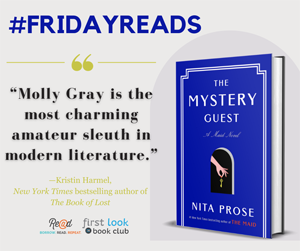
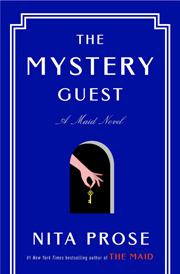
Dear Reader, In 2022, the IRS audited 3.8 out of every 1,000 returns, or .38 percent. The odds are still in the taxpayer's favor, so they tell me, but my odds have never been good concerning the IRS. I've been audited three times. There ought to be a law! My husband is a man who doesn't like to root around in any gray areas when it comes to taxes. I admit, in the past, I've rolled my eyes a time or two, thinking he was being way too cautious, but then the tax man came knockin' at our door. After our third audit the IRS agent announced, "I could do all the paperwork and you might owe us $34.00, so I'm giving you a 'No-Change' status. Only thirteen percent of audits are no-change, so if you're ever audited again, hang this certificate on the wall so the agent can see it." It's framed and waiting. Thanks for reading with me. It's so good to read with friends. Suzanne Beecher P. S. This week we're giving away 10 copies of the book The Mystery Guest by Nita Prose. Click here to enter for your chance to win.
| |||
"You don't have to flick a switch?" I asked. "No," Gran replied. "It's as if the mansion knows you're there." It sounded supernatural, like magic, something out of a fairy tale. And while Gran has described every detail to me, I've never seen the mansion with my own eyes. No wonder I feel like an astronaut landing on the face of Mars. Regardless, I'd rather be here with Gran than at school, which is where I'd normally find myself on a weekday. That's where we're coming from, in fact—school. This morning, Gran was called to an early meeting with my teacher, Ms. Cripps, and despite Ms. Cripps's protests, Gran allowed me to attend the appointment. We met my teacher in the principal's office, which I'd visited more times than I cared to remember. Ms. Cripps seated herself behind the principal's large wooden desk, while Gran and I sat in stiff chairs in front of her. "Thank you for coming," Ms. Cripps said. I can picture her face in my mind, that tight smile that I could not read at the time. I thought her the very picture of politeness. I know better now. "My granddaughter's education is a matter of utmost importance to me," Gran said, but as I replay the memory, I note Gran's folded hands, how she placed them with purpose on the desk in front of her—a small gesture, both a plea and an assertion. "May I ask where Molly's mother is?" Ms. Cripps inquired. "Not that I mind dealing with you, but you are one generation removed." "Molly resides with me. I am her guardian. And she is my legal ward." I was about to tell Gran she hadn't answered the teacher's question, something Ms. Cripps frowned upon, but as I opened my mouth to speak, Gran's hand came down on my knee, which caused my speech to stop in my throat, though I didn't know why at the time. I tried to work out the connection by humming the Skeleton Song about how the foot bone is connected to the leg bone and so on, but I made it through the entire song without encountering a single lyric connecting my tongue to my knee. Meanwhile, Ms. Cripps and Gran continued their polite conversation. "I know you're busy, Mrs. Gray. You are a married woman, correct? A missus?" "You can call me Ms. Gray," Gran corrected. "I understand from Molly that you still work. I must say it's impressive at your advanced age." Gran cleared her throat. "The issue is this," Ms. Cripps continued. "We're weeks away from the close of the school year, and it's that time when we think about student placement in the year to come." "I commend your advance planning," Gran replied. "Molly is looking forward to having a new teacher next year, isn't that right, Molly?" "I can't wait," I said. "I would also like new classmates." "That's just it, Ms. Gray," Ms. Cripps said as if I hadn't spoken. "I've come to the difficult decision that the best thing for Molly is to hold her back a year. I'm afraid her progress does not meet our educational benchmarks." Gran shifted in her chair, looking from me to Ms. Cripps. "I don't understand. Her progress reports indicate good grades." "Yes, her grades are satisfactory. Her language skills and reading ability far surpass those of her peers. She's often a little too precocious. She corrects her classmates' grammar and schools them on vocabulary." Gran suppressed a laugh. "That's my Molly." "But you see, she's . . . different." "I agree entirely," Gran said. "She's a unique girl. But have you ever noticed, Ms. Cripps, how despite our differences, fundamentally, we are all the same?" It was Ms. Cripps's turn to avoid the question. Instead of answering, she said, "Molly's social development is subpar. She hasn't made any friends at school. In that way, she's a failure. Ms. Gray, I'd describe Molly's social skills as . . . primitive." "Primitive," I said. "P-R-I-M-I-T-I-V-E. Primitive." I waited for Gran to approve my spelling, but she didn't say a word. Even though I knew I'd spelled the word correctly, she appeared on the verge of tears. I wanted to tell her everything was going to be okay and that I knew the word because of the David Attenborough documentary we'd watched together a few weeks earlier. It was about apes, such incredible animals, so often underestimated. They can use primitive tools to problem-solve, not only in laboratory and zoo settings but also in the wild. Remarkable! "Ms. Gray," Ms. Cripps said, "the other day Molly berated a classmate for chewing with his mouth open. She stands so close to the younger children, it frightens them. She insists on calling the janitor Sir Walter of Brooms. Some days, she hides in a washroom stall and refuses to come out. So you see, she's not at the level of children her age." Gran straightens in her chair. "I agree entirely. She is 'not' at the level of the other children. Molly," Gran said, turning to me. "Why do you hide in the washroom?" "Dirt," I replied matter-of-factly. "Dirt?" Gran echoed, and I was so proud that I'd heard it, the delicate curl at the end of her sentence that meant she wanted to hear more. "At recess, I was invited to play soccer with the other children. I agreed to be goaltender before I noticed the mud puddle stretching from post to post. When I refused to stand in the goal, my teammates held me in place and my shoes filled with mud. When I screamed, they threw mud at me and told me to get used to it. 'Dirt is nothing to be afraid of.' That's what they said." Gran's mouth opened wide, and she turned to Ms. Cripps wordlessly. "Kids will be kids. They meant no harm," Ms. Cripps said. "Plus, Molly has to learn somehow." "On that last point we agree," Gran said. "But certainly Molly does not need to learn this way, nor should her peers be in charge of her education." It was an interesting statement. And I'll admit that up to that point, it had never occurred to me that my classmates could also be my teachers. In my mind I questioned the merits of this educational approach. What was I to learn from having my face periodically forced into the toilet bowl in the washroom, or a glob of spit left in my pencil case? What was I to learn from being called Mental Molly, the Prissy Missy, Clean Machine, and, my least favorite, Oddball Moll? It's true, I had learned one thing from my classmates, which is that the saying about sticks and stones was all wrong. They had given me ample practice at dodging both projectiles, and even when their missiles met their mark, the bruises faded over time. But words—the sting of them, the stigma—endured forever. Their words sting to this very day. "Have you ever thought that Molly might benefit from more individualized attention?" Gran asked as she leaned forward in her chair. "Perhaps the school can make adjustments so she feels more comfortable in class. It might be good for her teachers to try new approaches to reach Molly, don't you agree?" Ms. Cripps chuckled then, and at the time I thought I'd missed a joke. "I've been a teacher for going on seven years after five years of university. I think by this point I know what I'm doing," said Ms. Cripps. "Of course, there are plenty of options for a child like Molly, and I'm happy to send you away with pamphlets about the specialists you can hire to deal with her privately." "Privately," Gran repeated. "Meaning there'd be a cost." "Naturally. You don't expect educators to work for free, do you?" "Of course not," Gran said as she removed her hands from the desk in front of her. "This is a public school, Ms. Gray. We can't cater to just one girl. I teach a class of thirty-five." "I see," Gran replied. "I'm afraid a specialist or private school is beyond my means." "You're a domestic. A maid, correct?" Gran nodded. "Molly often talks about you. She wants to grow up to be just like her gran. The apple doesn't fall far from the tree, so they say. She could grow up to be a cleaner. Maybe a dishwasher. That seems like an appropriate career goal for a girl like her." Gran looked down at her lap. It took her a moment to reply. "I'm having trouble understanding how a child with good grades can be held back a year. I'm not convinced that's the right educational approach. While I appreciate your opinion on this matter, may I please speak with the principal?" Gran asked. "That's me," Ms. Cripps replied. "It hasn't been announced yet, but the board thought it best to bring in fresh blood, someone . . . a bit more youthful. The old principal is retiring at the end of the year. She's on leave at the moment. Stress leave," she added in a whisper, but I heard it just fine. "Very well," Gran said, and with that she slapped her thighs, collected her purse, and stood rather abruptly. "Let's go, Molly," she said. "Time is precious." I followed my gran as she made her way to the door. "Wait," Ms. Cripps said. "Molly stays here. She's got a full school day ahead of her." "Ah," said Gran. "I'm afraid you're mistaken. If you're forcing her to repeat the year, then the least I can do is relieve her of having to finish this one. Goodbye," Gran replied. And with that, she marched me right out the door. In my mind, a warm hand cradles my own, such simple comfort. I'm not in the new principal's office anymore. I'm standing with Gran in front of the Grimthorpe mansion. "Are we going in?" I ask. "Yes, we're going in," she says. "Are they expecting me?" "No, they're most certainly not expecting you." "What if they don't want me in the house while you're working? What if they don't like me? What will we do then?" "My dear girl," Gran says. "We'll tackle the situation the way we tackle everything." "How's that?" I ask. "Together," she replies. Love this book? Buy a copy online.
| |||
| Mon Tue Wed Thu Fri Book Info | |||