| Mon
Book Info
Subscribe
| |||
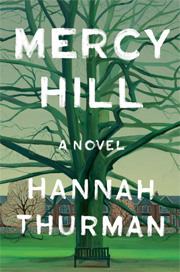
Dear Reader, I recently ran across this column I wrote several years ago. I have to say it still rings true… I'm convinced the most important part of a sentence comes after the word "but." But--usually by then I've already stopped listening. I get excited and start celebrating too early, because everything leading up to the word "but" sounded like just what I wanted to hear. "I think you're talented...but you aren't getting the job." "I love you...but I don't want to marry you." "I'm sorry, I didn't mean to hurt your feelings...but you started it." See what I mean? What someone really wanted to tell you, but they chickened out at the last minute, it's hanging out behind the "but." It's the coward's way out. But there are other ways of looking at it. My friend suggested that perhaps saying what you really mean after the word "but" isn't the coward's way out, it's merely "softening the blow." And she could be right...BUT...I don't think so. Thanks for reading with me. It's so good to read with friends. Suzanne Beecher P. S. This week we're giving away 10 copies of the book Mercy Hill: A Novel by Hannah Thurman. Click here to enter for your chance to win. | |||
Mercy Hill: A Novel Listen to a clip from the audiobook | |||
If I were to pick the number one strangest thing about my childhood, which was packed to the gills with strangeness, it would be the way the sun disappeared each day at noon. If I was at home and bored—which was often—I'd track its progress against the paneled walls of our cottage, watching them gleam as the light shone brighter and higher throughout the morning in anticipation of a glorious midday zenith. But this zenith never came. When the rays were about to reach their peak, they abruptly stopped, blocked by the largest of the stone buildings that stood at the very top of the Hill. A long shadow stretched down, covering our home and everything behind it, our daily total eclipse. Ten minutes later, the sun popped out again and everything brightened. We'd all grown used to this routine, and although visitors might have commented on it, we almost never had visitors. I suppose if someone had ever said anything, the rest of us would have shrugged and replied that strange as it seemed, it had been happening for a very long time. * * * MERCY HILL ASYLUM opened its doors in 1856 on land that, at the time, was considered far beyond the city limits of North Carolina's Piedmont capital, Raleigh: the first and largest mental hospital in the South. Old pictures in the admin building showed its massive acreage: orchards, fields, livestock stables—along with the four big stone buildings that would later become the wards. As the city developed, so did the asylum, erecting a nursing college and cottages for staff across the nearly two thousand acres of land. By the 1970s, that land began to look more precious, and the city started to reabsorb it, taking nearly all of the fields and flatlands where Mercy Hill's crops had once grown. The hospital was no less busy, filled with the insane from across the state, but everything became condensed to the steep inclines of the hill that gave the asylum its name, cut off at the base by a four-lane highway that led to Raleigh's epicenter. The next event of historical significance, at least in the minds of my sisters and me, was the hiring of our mother. In 1984 she became the first female director of psychiatry in the facility's history and, like all full-time staff, was offered housing in one of the employee cottages that clung to the north side of the Hill. Most of the other doctors, especially married ones, declined this offer, but our mother was never one to say no to something free. She and Daddy packed up their books and clothes and an ambitious fifty- seven-piece set of wedding china given to them by Daddy's mother, and moved into our cottage. My sister J.J. was born a year later, then Caro, then Mimi, then finally me. For many years, we four girls were the only children who lived on the Hill, which our mother called a "special privilege." Sometimes we believed her; sometimes it seemed like she was just saying that to make up for the fact that we didn't own a television. Our mother was not like the mothers of my classmates, or the ones I read about in books. She was brilliant and not modest about it, and although she could charm anyone she wanted to, rarely bothered. She was frequently brusque and snappish with us, even when we were very young. In return, we knew her word as bond—that she would meet us eye to eye as if we were grown-ups ourselves. * * * I WONDER IF, given everything that happened, she'd choose to do it again. The cottage, the isolation, the daily shadow running across our family until it darkened each one of us in turn. Was it worth it, for what we saved? I'm sure she'd tell me if I asked. But it's taken me years to untangle myself from her version of the truth. 1999 ONE Mimi's branch snapped like a gunshot, and all four of us began to scream. The magnolia had been an easy climb, and so we'd gone both high and far—up into the canopy and also out, scooting along the smooth limbs that reached over the barbed wire fence. Eighteen feet below us was the recreation yard of highest-security Ward C, and up until this moment, we'd had the perfect perch to spy safely on the men below. But Mimi, like always, had gone too far, out to where her bough tapered into leaves. My own arms began to shake as I watched the bough bend and then split. I felt a great ruffling wind as she plummeted past me, arms still locked around the limb like it would save her from what came next. Then two booms: first, as the wood made contact with the razor-wire fence, sending a wave of clanging along the chain links. Next, the thud as my sister and her tree limb landed inside the yard. The summer air was still and wet, and the cloying scent of magnolia flower rose from the ground where Mimi's fall had knocked down a shower of moon-white blossoms. Paralyzed, I clung tight to the bark, staring down. Mimi's right leg was twisted underneath her, bent back at an angle that I'd never seen before. Her face wrenched into a grimace, and even eighteen feet up, I could hear her whisper: 'Is he coming?' (continued on Tuesday) Love this book? Share your review with the Publisher
| |||
| Mon Book Info | |||