| Mon
Book Info
Subscribe
| |||
Dear Reader, I ought to be able to change my mind, but something inside of me thinks that changing my mind ranks right up there with committing a sin. Telling someone, "I'm sorry, but I've changed my mind and I won't be able to do what I said I would," or "I'm sorry, but I've changed my mind, I'm resigning from the committee." Oh, I shudder at merely writing the words. It feels like I've cut my finger, the blood is gushing and I may pass out at any moment. Always been a woman of my word, even if it meant I had to do things I never should have agreed to do in the first place. I can't really remember backing out on a "yes" decision until a year ago. (I'm sure there were other occasions that I'm conveniently forgetting.) The chairman of the committee called, he puffed me up a bit with some flattery--I was the expert they needed and I said yes. But I should have said no, and I knew it the minute I hung up the phone. The timing wasn't right and my heart wasn't in it. I thought about calling back right away, but after an emotional tug-of-war, I gave up and stuck with my tried-and-true belief--"It's for a good cause, Suzanne, you can't change your mind. You said yes and by golly, you're a woman of your word. You'll do the right thing, no matter what." The right thing? Never turning back on a decision doesn't leave me any room for making a mistake and puts a lot of pressure on me. But if I let go of my personal aphorism, how am I going to distinguish when I should change my mind or when I should hang in there? Maybe the truth is I've always been a woman of my word because it was easier. Thanks for reading with me. It's so good to read with friends. Suzanne Beecher P. S. This week we're giving away 10 copies of the book The House Built On Alligator Bones by Sophia Huneycutt. Click here to enter for your chance to win. | |||
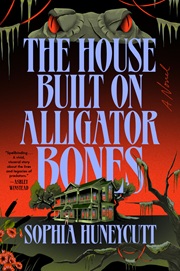
The House Built On Alligator Bones | |||
PROLOGUE Nature is consuming Greer House. Waist-high grass shudders against the wraparound porch. Honeysuckle chokes the stained columns. Kudzu claws at the murky green siding. It's an echo of what it once was—roof sagging, second-floor porch railing cracked, glassless windows dull as a corpse's eyes. Still beautiful, though. A crying bird swoops down from a gnarled oak tree and lands on the front walk, craning its neck to glare at me. Then it shrieks, like it's reminding me they'll notice my absence soon, and I'm in motion, slipping my bag over my shoulder, climbing out of the car into the heat. Too fast. Black dots sprinkle across my vision as I slam the door closed and sag against it. I can't rush this. Wiping sweat from my forehead, I carefully skirt the hood, eyes fixed in front of me. There's the dull gray carriage house, the crumbling brick courtyard, the angel statue with one cherubic cheek chipped off. I want to hug the dazed version of me from five years ago who faced that city inspector, presumably summoned by neighbors who couldn't have cared less that I'd just left the hospital. No wonder I took the coward's way out, handing him a check that made his breath catch and leaving the house to rot, the memories within to fester. As I step onto the front walk, those memories ooze forth, covering me in their muck. My instinct is to block them out, but I can't. Not anymore. They're what I'm here for. Once I remember what happened that night, I can decide whether this property is worth saving. I can decide whether this family is damned. The porch steps sag in the middle, so I walk on their edges, steadying myself against a column at the top. Grooves in the floor mark where the rocking chairs once sat. I hesitate at a window—without panes, it's practically a door—but pass it by. I want to enter Greer House like I used to. The front door is riddled with cracking black paint, chunks lying in place of a welcome mat. Alligatoring, they call it—the unique pat- tern old lead paint makes, like an alligator purse. Fitting. I slip the iron skeleton key, custom made with an alligator skull at its head, into the lock and turn the tarnished brass handle. The door creaks open to the patter of waterlogged feet, the dragging sound of a long, wet skirt against the floor. I hold my breath but hear nothing else. Inside, Greer House smells like rotten wood. There's nothing much left. Aunt Virginia had already moved out by the time I fled, and passersby must have taken their fill shortly after. In the drawing room to my right, a cracked teapot lies by the fireplace, its porcelain alligator lid now tailless. Before me, several steps of the grand staircase are miss-ing. I wander to my left, into the dining room. Once emerald green, it's faded to a muddy color, black mold blooming in the corners. No paintings remain on the wall; Aunt Virginia must have taken me seriously when I asked her to burn them. A few dining chairs lie on their sides, seats rotten. From the darkened parlor beyond the dining room comes a light thud, and my skin crawls. An animal, maybe. I refuse to look in the far corner, where a limp curtain covers a quarter of the paneless window; if blood still stains the floor, I don't want to see it. Instead, my eyes fall to the fireplace. Her portrait still lies on the floor in front of it, the axe still stuck inside her, blade now dulled. So, Aunt Virginia couldn't bring herself to destroy this one. A scream echoes in my mind, two voices in one, like some chorus from hell— Something thumps the parlor wall. I jump, breath catching. Not her. Please, not her. Low to the ground, a gray shape slips out of the shadows, its yellow eyes blinking as my squeak of fear turns into a laugh. Just the old neighborhood cat. "Hey, kitty," I say, eyes on the parlor as I extend a finger. She saunters toward me, bumping her temple against an over-turned chair, but stays out of reach. No surprise there. She's always been polite but aloof. I admire her as she strides toward a window. Before, no animal could enter Greer House uncaged; the lady of the house wouldn't allow it. I settle into a damp seat facing the parlor. Satisfied with my vantage point, I set my bag on the dusty table and reach inside, pulling out my new sketchbook and favorite pen. My hand hovers at the bag's mouth. Do I really need a reminder of what made me get in the car this morning? Yes. Otherwise, I might make a run for it. The box of pregnancy tests is cool to the touch, impersonal. If Mama were alive, she would have already made me take one. At the sight of two pink lines, she'd have dragged me to the clinic, then back to Greer House with a box of matches and a can of gasoline. Placing the tests on the table, I steady myself. I'm not here to imagine what she would do. I'm here, in our ancestral home, our rotting heart, to decide whether we deserve a future. And before I can judge us—before I can judge myself—I have to remember every detail of that night. I'll draw some of it and write down the rest. Get my thoughts clear, leave a record for whoever's left when I'm dead. Maybe then someone will know who I really am. I set my pen to paper. When did I put that evening's events in motion? The moment I threw red Georgia dirt on Mama's coffin? The first time I read the Greers' names? The last time I slid a knife into an alligator? No. The letter. Emotions flood me, fresh as when I first felt them: hope, betrayal, guilt. It started with the letter. ONE The letter lay in the kitchen trash, nestled between a mound of browning orange peels and a paper towel streaked with vomit. It was addressed to Mama from someone named Gazzie Greer in Fernandina Beach, Florida. I'd never seen it before, which meant she'd risen from her deathbed to throw it out. I dropped the extra funeral pamphlets into the trash and held up the envelope, picturing Mama shuffling through the hall, hand on the wall for support. That would explain why she'd been gasping for air when I'd returned from my shower, why blood had started seeping from her stitches, deep red streaked with yellow. Here, too, was the reason for her heart attack: overexertion. I'd questioned its cause for days afterward, worried my reluctant caregiving—or that last explosive argument—had been at fault. The doctor had explained heart at-tacks were a common kidney transplant complication, but doubt wormed inside me nonetheless. Now I faced a new, baffling question: Who was this woman trying to contact my mother? We had no friends. No family. No one but each other. Maybe this Gazzie person was an acquaintance from Mama's years in the foster system; I had no other guesses. It was one of those Savannah spring nights that bit like winter. Shivering, I wandered into her bedroom, like she could explain herself once I read the letter, like I hadn't just come from her funeral, dried tears itching my cheeks. Wind cut inside through a cracked window. I closed my eyes, trying to resurrect her rose-soap scent, but the only smell in that room was death. Fingers trembling, I opened the envelope. Out fell a short letter written in sprawling cursive—and two halves of a ripped check for $30,000. More than half my yearly salary. Enough to pay off our over-due medical bills, hire a day nurse, treat ourselves to raspberries every once in a while. Discarded like a discount flyer. My legs hit the edge of Mama's threadbare bedside chair, and I sat down hard, scanning the check again, like if I read the amount one more time, it would transform into a more reasonable number. The letter itself was intact but crumpled, like Mama had handled it often, though the envelope was time-stamped only two weeks earlier. She must have received it several days before her surgery. 'Caroline,' 'I hope you aren't too upset I found your address. I heard you're ill through the grapevine and wanted to send you my well-wishes. Sometimes I think these rickety bodies are the only thing standing between us Greers and world domination.' 'I'm stalling, I know. Something I discouraged in you. Truth is, I regret the way we parted, my girl, and I want to meet my granddaughter. It's time. Please email Ginny at virginia@greerfinealligators.com'' if you're willing to meet. I still don't check mine, and you know how I feel about phones.' 'Gazzie' 'PS. Cash the check. We've missed a lot of birthdays.' 'PPS. I'm including a small print of Ida's portrait. A professional did them a few years ago. Thought you' d appreciate a copy.' The thump of my heartbeat sounded in my ears. 'My granddaughter.' I reread the words over and over. This Gazzie person called me her granddaughter, which meant she was my grandmother, which meant I was not alone in the world. Which meant Mama had lied to me for thirty-two years. (continued on Tuesday) Love this book? Share your review with the Publisher
| |||
| Mon Book Info | |||