| Mon
Book Info
Subscribe
| |||
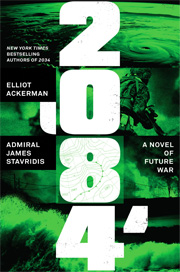
Dear Reader, I'm on holiday this week and while I'm away, we'll be having shrimp week and the book club. I'm sharing my all-time favorite recipes. (And there's a giveaway too.) Let's start the week with one of my favorite shrimp-related colums... Years ago, when I was publishing a business magazine, whenever a new restaurant was getting ready to open in the city, the owners would always have a first-night, private party. They wanted to get the word out in the community, and the new kitchen staff needed a trial-run. So the media was always invited and I'd get an invitation. Free food has never been a very big deal to me, but this particular invitation was for a restaurant specializing in seafood. I love fresh shrimp, and sure enough, there were two heaping platters, with sides of horseradish cocktail sauce on the buffet table--I couldn't resist. I'm embarrassed to admit that I ate way more than my 'socially acceptable' share of the jumbo delights, washing them all down with a couple of glasses of white wine. Then I jotted down a five-star rating on their "How did we do?" card, went home, put on my pjs and went right to sleep. But forty minutes later I woke up feeling like I was dying. Bent over, crawling around the bathroom floor; my chest, stomach, intestines, everything below my neck down to my knees was cramping. "Take me to the Emergency Room!" I yelled to my husband. Just like in the movies, two nurses were waiting for my husband and me outside, in front of the ER just like in the movies. And when they immediately wheeled me straight back into an exam room, no waiting, no paperwork, nobody asking, "What's your mother's maiden name?"--it was confirmation to me--'I must be dying!' I'd never seen so many doctors in one room. Am I allowed to die if no one has called my HMO for pre-authorization?' "Suzanne, we're going to have to do emergency surgery, you must have a blockage somewhere." And a nurse wheeled me off to x-ray. A surgeon was on his way, nurses were starting to prep me for the operating room and that's when a doctor holding my x-ray appeared. "I have good news and bad news, Suzanne. The good news is you don't need surgery. The bad news is you have really bad gas. We can give you something for it, but it will probably take hours for everything to clear out. How many of those jumbo shrimp did you eat?" Thanks for reading with me. It's so good to read with friends. (Tomorrow's column will feature my all-time favorite shrimp recipe.) Suzanne Beecher P. S. This week we're giving away 10 copies of the book 2084 by Elliott Ackerman. Click here to enter for your chance to win. | |||
The Armada 23:47 Nov 09, 2084 (-5 GMT) New Orlando The skiff passed over a black sheet of water. The moon was down. Stars appeared as tiny pinpricks overhead. Julia Hunt listened for the shore . . . a stray voice, animal sounds, a car's engine. Nothing yet. She sat in the bow, a cracked chem stick casting a pale glow on the paper map spread across her lap, one of a handful of old documents she'd requested from her office at UN headquarters. She compared it with the up-to-date hologram produced by the implanted visi-chip in her left wrist. They didn't match at all. Old Florida appeared on the paper map like a welcoming arm reaching out into the Gulf. A terrible season of storms two decades ago had eradicated the coast, turning that arm into a stump after years of rising sea levels. Julia had marked the line of amputation with red pencil. The new coast extended in a diagonal from Daytona Beach in the east, bisecting Old Orlando, and then on to St. Petersburg in the west. She had spent little time in Florida, but she understood the anger and heartbreak of native Floridians as so much of their beloved peninsula vanished beneath the waves. Julia had set out from Greenland less than twenty-four hours earlier. She'd left her office in a rush, with hardly time to pack a bag. An unmarked Brazilian transport had picked her up at an FBO outside of Nuuk, flown her south across Greenland's coast, and delivered her onto the carrier deck of a multinational flotilla gathered just outside the Gulf of Mexico. The flotilla's commodore, an Indonesian captain named Joko, had gone over the message Julia was tasked to deliver as envoy. Not long after dark she had departed his flagship on the skiff with a pilot and four-man security detail of Indonesian Marines. Now, many hours later, she wondered if they'd ever find the coast and their rendezvous. Without warning, the pilot threw the rudder violently starboard. Julia toppled to the deck. The twin outboard motors reversed, churning up the water. Julia caught a heavy whiff of diesel as she stood. As a citizen of a Consortium member nation, she hadn't smelled those fumes in years. The pilot pointed overhead, gesturing for her to duck. The skiff passed slowly beneath a steel scaffold arching out of the water. The pilot issued another sharp order. A Marine scuttled up to the bow, nudging Julia to the side. He held a high-powered flashlight. Its beam washed over a tangle of these scaffolds. It was an old roller coaster. Julia glanced once more at her map. She now realized exactly where they were. She placed a red X on what had once been Disney World. She recalled a childhood trip with her adoptive mother after the war as their skiff made wakeless progress through the wreckage. The Marine shut off his light and climbed back to the stern as the amusement park passed behind them. The pilot throttled the engines and they hurried toward the coast, a darker band of darkness growing on the horizon. The pilot idled their engine at a hundred meters out. The current drew them silently onto the beach. Julia could hear the waves lap against the sand as their flat-bottomed hull scraped onto the shore. She leaped over the gunwale, landing thigh deep in the water. The four Marines followed, their rifles tilted at the ready. The rendezvous was less than a mile away, at an abandoned airstrip. Standing in the Indonesian commodore's stateroom earlier that evening, Julia had asked for more details on the rendezvous, the name of who she'd meet, their description, anything really. But the commodore only repeated the little he knew. Ever since Indepen- dence, the Floridians had proven notoriously difficult to work with, uncooperative at best and hostile at worst. Her instructions were to head to a nearby airstrip and wait. An envoy would arrive sometime before first light. Sand coated Julia's boots as she crossed the beach. Her salt-water- wet trousers clung to her legs as she hurried onto the dirt track that led to the airstrip. The summer before, she'd turned sixty and had already served three years at the UN as the Special Representative for the Future of the Planet. She thought of herself as an environmental scientist first and a diplomat second. She had only this year placed a down payment on a farmstead east of Sarqaq, in Greenland's wine country, only ninety minutes by gravi-train from her condo in Nuuk. Before this assignment, the chapter of her life when she'd been Major Julia Hunt, US Marine Corps, had felt long behind her. But here she was, sandy and soaking wet, marching down a dirt road. She glanced at her watch: a little before midnight, November 9. Tomorrow, November 10, would be the US Marine Corps's 309th birthday. The dirt road opened onto a clearing dominated by a rough-hewn airstrip. Gutted planes rotted against the black tree line. Julia's four-man escort fanned out across the runway. Using their low-light sen-sors, they swept the abandoned control tower and waved for Julia to join them. The wait wasn't long. A jet engine whined overhead, rat-tling the windowpanes in the tower. An old Chinese J-19 flew a single low pass, then it flared up, its engines autorotating as it began its vertical descent. Its landing gear touched down on the airstrip as gingerly as a teacup clinking against a saucer. When the canopy hinged open, the pilot grunted, shifting his weight around with some effort. He hoisted himself up from his cockpit. Once he'd come to standing, he tottered back and forth, arching his back, as if trying to relieve some unrelievable ache. He removed his oxygen mask to reveal a mustache, ample as a dragoon's and white as a bank of fresh snow. He took off his helmet and his thick, silver hair fell to his collar. He shouted toward the control tower, "You in there, Dr. Hunt?" Julia could make out the markings of the Floridian Confederation on the jet's gray fuselage. The pilot wore a flag patch on his shoulder with the St. Andrew's cross, its red diagonal bars embroidered on a white background. As Julia approached, he introduced himself: Colonel Mark Dundee, Floridian Air Corps. He didn't bother to climb down from the cockpit. "I'm here to see . . ." "I know who you're here to see," he said. "And I'm here to take you to see him." Colonel Dundee gestured to the back seat of his plane. "Hop in." * * * 02:17 Nov 10, 2084 (-5 GMT) Gulf of Mexico, West Florida Shelf Commodore Joko sat on the bridge of his flagship, the 'Banda Aceh', waiting for news. When the Marines reported that Julia Hunt had made contact with the Floridians, Joko asked about the composition of their delegation. They didn't know. A single plane had landed on the airstrip—a J-19. The pilot had taken Dr. Hunt with him. It had all happened very fast. Joko exploded. "What do you mean, taken her with him?" The Floridian pilot had flown her to a different meeting site, and the Marines didn't know where. They had protested . . . they had advised Dr. Hunt against leaving . . . but she hadn't listened. The pilot, a colonel, had assured them that he was taking her to a second loca-tion for security purposes. He would return her to this airfield, and then they could return to their flotilla. Joko took one long, deep breath followed by two short ones, a technique Gemi had taught him. His anger, like a clenched fist in his chest, eased its grip. They had a mission. Yelling at the Marines would do no good. Joko thought about the nineteen enormous nuclear-powered ships under his command, three six-ship strike groups. Each one had dozens of strike vessels, almost all unmanned, which constituted the flotilla's combat power. He liked to think of his flotilla as an armada, an ancient word, a grand word, one that conjured invasion fleets from prior centuries. Each of the three strike groups fell under the command of an officer from one of the three largest Reparationist nations, the R3: Brazil, Indonesia, and Nigeria. Joko's flagship was the only purely amphibious vessel in his ar- mada, designed to place his Indonesian Marines or Brazilian Naval Commandos ashore. He hated that he was stuck on the slow-moving amphib. He craved the freedom and maneuverability of a destroyer or frigate. But he was the commodore, and the amphib possessed the most advanced technical suite for command and control. Joko ordered the Marines to maintain continuous communica-tion. He strode across the bridge to examine a holographic chart pro-jecting from his work console. His three strike groups were fanned out in a line of battle at the edge of what the Floridians considered their territorial waters, an economic exclusion zone extending two hundred miles from the shoreline. "Are Captain Duarte's and Gambo's ships holding position?" Joko asked. The deck officer, a newly arrived ensign, confirmed that all ships were no closer than twelve nautical miles south of what had once been Key West. By anyone's definition their flotilla remained in international waters. If the favorable weather held, Joko calculated they could be positioned in their ops box by tomorrow night, so long as Julia Hunt received the assurances they were looking for from the Floridians. "Think we'll sail north tomorrow, sir?" the ensign asked. Joko made a slight affirmative grunt. "We'll have to see." He suddenly noticed how young the ensign was. "When did you graduate the academy"—he glanced at the ensign's name tag—"Mr. Sinaga?" "Half our class didn't finish, sir. No graduation." Historically, wars had forced early academy graduations, but these days storms did, as the navy rushed officers into the service to deal with one environmental crisis after the next. Joko now recalled that he'd seen the ensign's name before, on a roster of new arrivals. The ensign's maternal uncle was a general, the chief of staff of the National Armed Forces. Joko appreciated that this young man had joined the navy from an army family, cutting against the grain. "One of my first assignments was on an amphib," Joko said to the ensign sympathetically. "You'll have your turn on a destroyer or frig-ate soon enough." "I'm in no rush, sir. I like it here." Given the armada's mission, service on the 'Banda Aceh' did have a symbolic resonance. A super typhoon had wiped out the Sumatran port city a decade ago, killing almost two million people. No one could've imagined when they'd laid down the hull of this ship that it would outlast its namesake. Poor equatorial nations like his own had paid a hefty price for the environmental excesses of far wealthier countries. The Consortium nations had a debt to pay. They could choose to pay it in blood or in land. This armada would present them with that choice. * * * 12:30 Nov 10, 2084 (+8 GMT) China World Trade Center Tower VI Jake Shriver had bought the entire 152nd floor. It was quite a bargain, he told his guest as they ate. Between bites of lobster roll—flown in from Cape Cod—he explained that the most expensive real estate in the building was between the 70th and 95th floors. "Once you get above that," Shriver said, "you've got the wind to contend with. Look there." He pointed to his glass. The water inside pitched slightly from side to side. "It's like being on a ship. Most people prefer to sit a few hundred or a thousand feet above the earth while having the sensa-tion that they're on solid ground. But if I'm going to be up here, I want to feel things moving around. Know what I mean?" He bent forward and took another bite of his roll. His lunch partner, Zhu De, was a new acquaintance. Shriver's old contact in the Guoanbu, Zhao Jin, had retired the year before after a thirty-year career in Chinese intelligence. This new fellow seemed a joyless sort. He wore rimless glasses with small lenses the size of coins. He hadn't touched his lobster roll. A well-worn leather attaché case leaned against the leg of Zhu De's chair. A long, uncomfortable silence provoked Shriver to ask, "What do you have in there?" "Signals intercepts. Highly classified." Zhu De pulled out a tablet, turning it over in his manicured hands, before passing it across the table. "Two days old." (continued on Tuesday) Love this book? Share your review with the Publisher
| |||
| Mon Book Info | |||