|
_________________________________________________________
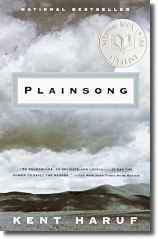 PLAINSONG PLAINSONG
by Kent Haruf
(fiction)
Published by Vintage Books, a division of
Random House, Inc.
Copyright © 1999 by Kent Haruf
(Chapters used with permission of publishers and authors.)
If you enjoy reading this book and you’d like to read other books delivered each day in your email, sign up at these participating libraries:
__________________________________________________________
Downstairs, passing through the house, Guthrie could hear the two boys talking in the kitchen, their voices clear, highpitched, animated again. He
stopped for a minute to listen. Something to do with school. Some boy saying this and this too and another one, the other boy, saying it wasn't any of that
either because he knew better, on the gravel playground out back of school. He went outside across the porch and across the drive toward the pickup. A
faded red Dodge with a deep dent in the left rear fender. The weather was clear, the day was bright and still early and the air felt fresh and sharp, and
Guthrie had a brief feeling of uplift and hopefulness. He took a cigarette from his pocket and lit it and stood for a moment looking at the silver poplar tree.
Then he got into the pickup and cranked it and drove out of the drive onto Railroad Street and headed up the five or six blocks toward Main. Behind
him the pickup lifted a powdery plume from the road and the suspended dust shone like bright flecks of gold in the sun.
CHAPTER 2 Victoria Roubideaux.
Even before she was awake she felt it rising in her chest and throat. Then she rose rapidly from bed in the white underpants and the outsized tee-shirt she
wore at night and rushed into the bathroom where she crouched on the tile floor, holding her streaming hair away from her face and mouth with one hand
and gripping the rim of the bowl with the other while she retched and gagged. Her body was wracked by spasms. Afterward a spit-string swung from her
lip, stretched, elongated, then broke off. She felt weak and empty, Her throat burned, her chest hurt. Her brown face was unnaturally pale now, sallow and
hollow beneath the high cheekbones. Her dark eyes looked larger and darker than ordinary, and on her forehead was a fine film of clammy sweat. She stayed kneeling, waiting for the gagging and paroxysms to pass.
A woman appeared in the doorway. She at once flipped the light on, filling the room with harsh yellow light. What's all this? Victoria, what's the matter with you?
Nothing, Mama.
Something is. You think I don't hear you in here?
Go back to bed, Mama.
Don't lie to me. You've been drinking, haven't you.
No.
Don't lie to me.
I'm not.
What is it then?
The girl rose from the floor. They looked at each other. The woman was thin, in her late forties, haggard of face, washed-out, still tired though she'd just
risen from sleep, wearing a stained blue satin robe she clutched together over her sagging chest. Her hair had been dyed, but not recently; her hair was
maroon, like no human natural color anywhere, the white roots showing at the temples and above her forehead.
The girl moved to the sink and ran water onto a washcloth and held the cloth
to her face. The water dripped into the front of her thin shirt.
The woman watched her and removed cigarettes from her robe pocket and
took out a lighter and lit the cigarette and stood in the door smoking. She scratched one naked ankle with the toes of the other foot.
Mama, do you have to smoke in here now?
I'm here, aren't I? This is my house.
Please, Mama.
Then she was sick again. She could feel it rising. She was kneeling again at the bowl, gagging, her shoulders and chest wrung by dry spasms. Her dark
hair was caught as before in one hand, automatically.
The woman stood over her, smoking, surveying her. Finally the girl was finished. She stood up and returned to the sink. You know what I think, little
miss? the woman said.
The girl applied the wet washcloth to her face once more.
I think you got yourself knocked up. I think you got a baby in you and it's making you puking sick.
The girl held the cloth to her face and looked at her mother in the mirror.
Didn't you.
Mama.
That's it, isn't it.
Mama, don't.
Well you stupid little slut.
I'm not a slut. Don't call me that.
What do you want me to call it? That's the name for what you done. I told you before. And now look at you. Look here at what's happened. I told you, didn't I.
You told me a lot of things, Mama.
You better not get smart with me.
The girl's eyes filled. Help me, Mama. I need you to help me.
It's too late for that, the woman said. You got yourself into this, you can just get out of it. Your father wanted me to hold his head too. All them mornings
when he'd come home feeling sick and sorry for himself. I won't hold yours too.
Mama, please.
And you can just leave this house. Like he did finally. You're so smart, you
know everything. I won't have you in here like this.
You don't mean that.
See if I don't. You just try me, miss.
In the back bedroom she dressed for school in a short skirt and white
tee-shirt and put on a jeans jacket, the same clothes she'd worn the day before, and looped a red shiny purse on a long strap over her shoulder. She left the house without eating anything.
She walked to school in a kind of dream, walking out of the meager street onto the pavement of Main, across the tracks and then up onto the wide vacant early-morning sidewalks past the display windows of the stores,
watching her reflection, how she walked and carried her body, and as yet she could see no change. There was nothing she could discern outwardly. She
went on in her skirt and jacket with the red purse swinging at her hip.
CHAPTER THREE Ike and Bobby.
They mounted their bikes and rode out of the drive onto the loose gravel on Railroad Street and east toward town. The air was still cool, with the smells
of horse manure and trees and dry weeds and dirt in the atmosphere and something else they couldn't name. Above them a pair of magpies swung on a
cottonwood branch screaming, and then one of the birds flew off into the trees beyond Mrs. Frank's house and the other cried four times, harsh and rapid, before it too flapped away.
They rode along the gravel road and passed the old vacated light plant, its high windows boarded over, and turned onto the pavement at Main Street
and then bounced over the railroad tracks onto the cobblestone platform at the depot. It was a single-story redbrick building with a green tile roof. Inside
was a dim waiting room smelling of dust and being closed up, and three or four highbacked pewlike wood benches set in rows facing the train tracks
and a ticket office with a single window set behind black grillwork. An old green milk wagon on iron wheels stood outside on the cobblestones beside
the wall. The wagon was never used anymore. But Ralph Black, the depot agent, admired the way it looked on the platform and he left it there. He didn't
have a lot to do. The passenger trains only stopped in Holt for five minutes, coming and going, long enough to allow the two or three passengers to board
or get off and for the man in the baggage car to drop the "Denver News" onto the platform beside the tracks. The papers were there now, bound in twine in
a single stack. The bottom papers had torn on the rough cobblestones.
CLICK HERE TO CONTINUE READING
BACK TO PREVIOUS PAGE
__________________________________________________________
BUY THE BOOK
PLAINSONG
By Kent Haruf
(Paperback)
Retail $13.00
Book Club Price: $9.89
Click Here to purchase book.
Click here for the best price on OTHER BOOKS
________________________________________________________
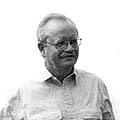 Kent Haruf is the author of two previous novels,
Where You Once Belonged, winner of a Whiting Foundation Award and a citation from the Pen/Hemingway Foundation, and The Tie That Binds. In Plainsong, Mr. Haruf writes of a town and a few
people that are integral to that town's character. His chapters alternate between the experiences of Tom Guthrie, a high school history teacher who is father to two boys, Ike and
Bobby, and husband to a wife who is slipping away from them into a deep depression. There is also a seventeen-year-old high school girl named Victoria Robideaux who, on the first day we meet her, is living with her
mother but will soon find herself on a journey towards a home and all that is implicit in that word. We also meet the brothers McPheron, two elderly cattle
ranchers who live a simple, hardscrabble life where they know no one so well as each other and their livestock and oh, the skies of the Eastern Plains of Holt, Colorado. Kent Haruf is the author of two previous novels,
Where You Once Belonged, winner of a Whiting Foundation Award and a citation from the Pen/Hemingway Foundation, and The Tie That Binds. In Plainsong, Mr. Haruf writes of a town and a few
people that are integral to that town's character. His chapters alternate between the experiences of Tom Guthrie, a high school history teacher who is father to two boys, Ike and
Bobby, and husband to a wife who is slipping away from them into a deep depression. There is also a seventeen-year-old high school girl named Victoria Robideaux who, on the first day we meet her, is living with her
mother but will soon find herself on a journey towards a home and all that is implicit in that word. We also meet the brothers McPheron, two elderly cattle
ranchers who live a simple, hardscrabble life where they know no one so well as each other and their livestock and oh, the skies of the Eastern Plains of Holt, Colorado.
Interview with Kent Haruf
________________________________________________________
READ BOOKS IN YOUR EMAIL
If you like reading this book and you’d like to read more books in your email, join an OnLine Book Club. Each day you’ll receive a portion of book that
takes about five minutes to read. You can read fiction, nonfiction, business, inspirational, teen, romance or you can listen to audio books. To join an OnLine Book Club visit these participating libraries:
SHARE THE READ WITH YOUR FRIENDS
Be sure to share this book with your friends and relatives. You can copy the link below and send it in an email or click on the FILE menu in your browser, select SEND LINK option.
READER COMMENTS:
If you have any questions, comments or book suggestions, please let me know. You can contact me, Suzanne Beecher, at:
Suzanne@emailbookclub.com
CLICK HERE TO CONTINUE READING
|